2026 PD Wrap Up: Building a shared responsibility for teacher wellbeing

At PESA, our learning focus for Term 1, 2026 is simple yet impactful: putting people at the centre of everything we do. Reconnecting staff, students, and families is the foundation of a vibrant, inclusive community, and it begins with the understanding that staff wellbeing is the bedrock of a healthy learning environment.

We were joined by Justin Robinson, Director and Co-Founder of The Wellbeing Distillery, for an online masterclass on ‘Building a Shared Responsibility for Teacher Wellbeing’, where he shared the Wellbeing Quadrant, a practical framework designed to promote wellbeing and proactively prevent ill-being. Below, we have synthesised the key takeaways and curated resources to support your school’s action planning for staff wellbeing. 

Author/Source: PESA and Justin Robinson, The Wellbeing Distillery

Last updated: 24/02/2026

2026 PD Wrap Up: Building a shared responsibility for teacher wellbeing

Why Teacher Wellbeing Matters

At PESA, our learning focus for Term 1, 2026 is simple yet impactful: putting people at the centre of everything we do. Reconnecting staff, students, and families is the foundation of a vibrant, inclusive community, and it begins with the understanding that staff wellbeing is the bedrock of a healthy learning environment.

We were recently joined by Justin Robinson, Director and Co-Founder of The Wellbeing Distillery, for an online masterclass on ‘Building a Shared Responsibility for Teacher Wellbeing’, where he shared the Wellbeing Quadrant, a practical framework designed to promote wellbeing and proactively prevent ill-being. Below, we have synthesised the key takeaways and curated resources to support your school’s action planning for staff wellbeing. 

Teacher wellbeing is often treated as a peripheral issue, a matter of policy or staff retention. Yet, research increasingly positions it as a foundational pillar of school effectiveness. To understand why, we must look past the obvious pressures of burnout and high turnover to see the systemic link between how teachers feel and how students learn.

  • Student Impact: When teachers are stressed or burnt out, students experience increased stress levels Oberle & Schonert-Reichl, 2016), reduced motivation (Shen et al., 2015), and lower academic and behavioural outcomes (McCallum, 2021; McCallum & Price, 2010; Wentzel, 2010). Furthermore, teachers with strong workplace wellbeing are more committed to promoting learner autonomy and adopting student-cantered practices (Üstündağ-Algın, et al., 1005).

  • Workforce Sustainability: Poor wellbeing is a primary driver of the current teacher shortage. As noted by Lemon and Turner (2024), teachers now lodge more mental health claims than any other profession, including healthcare workers.

  • Financial & Cultural Costs: High attrition leads to massive costs in recruitment and training, while simultaneously disrupting the "ripple effect" of school culture on families and the broader community.

 Ultimately, these points underscore a simple truth: teachers matter. Fostering wellbeing is not a luxury, it is essential to creating workplaces worth showing up to, places where educators feel valued and empowered to do the meaningful, life-changing work that defines the profession of teaching.

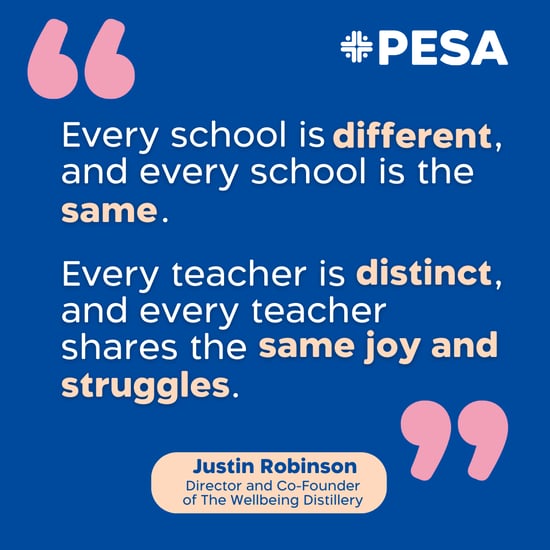
JustinQuote

Wellbeing as a Shared Responsibility: TWD Wellbeing Quadrant

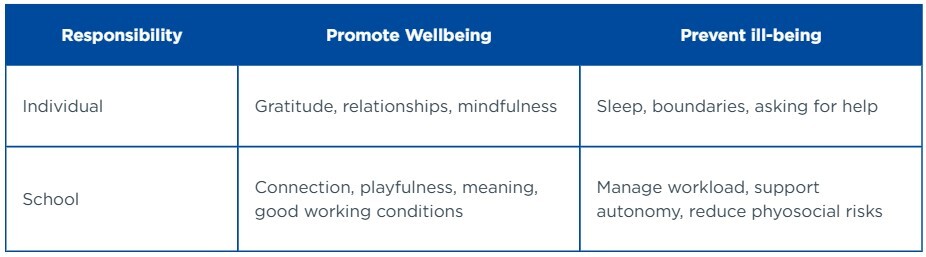
Wellbeing is not just the school’s job. Individuals, and even students share responsibility. Individuals manage personal habits like sleep, relationships, and mindfulness, while schools provide a safe, supportive environment.

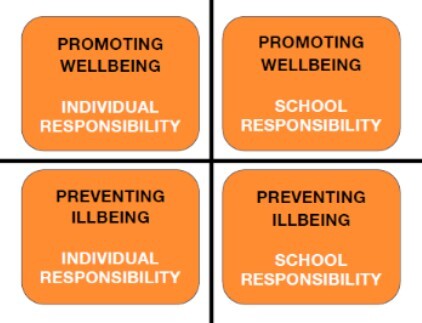
Justin shared The Wellbeing Distillery’s Wellbeing Quadrant as a simple tool for supporting staff wellbeing in schools by considering both who is responsible and what type of wellbeing objective is required. The framework emphasies that effective wellbeing strategies require the following complementary approaches:

  • Promoting wellbeing: Proactive actions that build positive experiences and engagement.

  • Preventing ill-being: Measures that reduce stress, burnout, and psychosocial risks.

WellbeingIllbeing

The Wellbeing Quadrant is a visual tool that can be used to show where wellbeing actions sit, also helping schools identify:

  1. which areas are strong

  2. which need improvement

  3. where responsibilities are shared or unclear.

Screenshot 2026-07-21 120516

Building a shared responsibility for teacher wellbeing

Presented by Justin Robinson: Director and Co-founder of The Wellbeing Distillery

Cultivating a culture where teacher wellbeing thrives through shared care and collective action.

Last updated: 12/03/2026

Building a shared responsibility for teacher wellbeing

Practical Resources

Finding the right ideas for your staff wellbeing action plan can be challenging. To help, Justin has generously shared some practical resources:

A comprehensive “idea bank”

Over 200 actionable items organised by risk factor, cost, and impact. This list was developed from focus groups run by The Wellbeing Distillery across 25 schools, offering tested strategies you can adapt to your context. 

Sentiments From Educators: What’s Worked Well for Teacher Wellbeing

Real sentiments from educators highlighting what’s worked well. Page two presents the thematic grouping for quick reference.

A comprehensive “idea bank”

Over 200 actionable items organised by risk factor, cost, and impact. This list was developed from focus groups run by The Wellbeing Distillery across 25 schools, offering tested strategies you can adapt to your context. 

Sentiments From Educators: What’s Worked Well for Teacher Wellbeing

Real sentiments from educators highlighting what’s worked well. Page two presents the thematic grouping for quick reference.

Further Reading

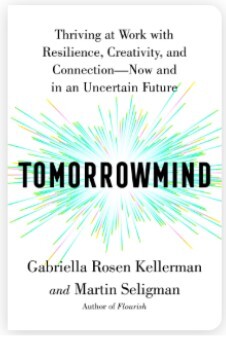
Tomorrowmind: Thriving at Work with Resilience, Creativity, and Connection - Now and in an Uncertain Future
by Gabriella Rosen Kellerman and Martin Seligman

In this book, Kellerman and Seligman offer a future-focused guide to thriving in an era shaped by automation, globalisation, and constant change. Drawing on rigorous research and real-world application, they outline practical, evidence-based strategies to build resilience, emotional intelligence, creativity, social connection, and foresight. More than a survival manual, Tomorrowmind equips individuals and leaders to create workplaces grounded in meaning, connection, and adaptability, so people and organisations can flourish, even in uncertain times.

tomorrowmind

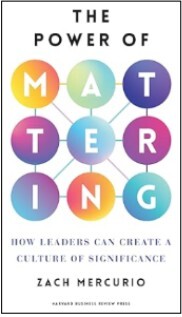
The Power of Mattering: How Leaders Can Create a Culture of Significance
by Zach Mercurio

In this book, researcher and speaker Zach Mercurio explores why so many people feel overlooked at work and how that impacts wellbeing, engagement and performance. Through research and practical examples, he introduces three simple leadership practices: Noticing, Affirming, and Needing to help people feel valued and indispensable. Packed with research, real-world examples and practical tools, this book helps leaders create cultures where people know they matter - and perform at their best.

powermattering

Referenced Research and Reports