
.svg)
Related Resources
Article
In Development
NSW Chapter Event Summary: Growth mindset to build potential at Ravenswood
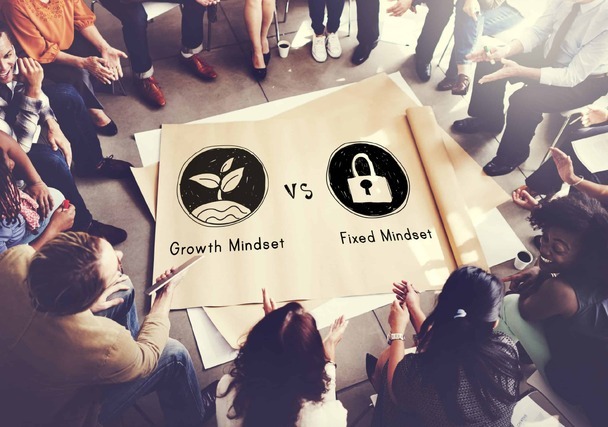
On Monday 16th of September, educators from across NSW gathered for an engaging afternoon of professional learning and networking, facilitated by the PESA NSW Chapter Committee. The topic was Growth Mindset, and the presenter was the exceptional Dr Justin Coulson. Author/Source: Lisa Davias, PESA CEO

Webinar/Video
In Development
Tales from the Trenches
This discussion by the PESA ACT Chapter occurs during the COVID-19 pandemic, discusses the importance of a benefit mindset and the how we can take an appreciative approach to the impact of COVID to education and wellbeing through changing someone's world. Author/Source: PESA ACT Chapter, Ash Buchanan, Dan Haesler

Presentation
Promoting a Mathematical Mindset
These slides from PESA QLD Chapter's conference in 2018 provide an overview of mathematics at Parkmore Primary School where the focus is on a growth mindset approach and that anyone can do maths. Author/Source: Simon McIntosh, Parkmore Primary School
Webinar/Video
Three Types of Mindsets: Fixed, Growth and Benefit
A short overview of the fixed, growth and benefit mindsets. Author/Source: Benefit Mindset

Webinar/Video
In Development
The Backwards Brain Bicycle
Destin Sandlin’s Backwards Brain Bicycle experiment shows that knowing something intellectually is not the same as truly understanding it at a neural level. Although he fully grasped how the reversed handlebars worked, decades of ingrained muscle memory overrode conscious thought, making simple riding impossible. The experiment highlights how deeply entrenched our neural pathways are, why unlearning takes sustained, correctly structured practice, and why breakthroughs often occur suddenly after long plateaus. It also demonstrates that you can’t “think” your way through certain skills—real learning requires the brain to physically rewire through repetition—and that children, with greater neuroplasticity, can adapt far faster than adults. Author/Source: Destin Sandlin, Smarter Every Day

Webinar/Video
In Development
Developing a growth mindset
Carol Dweck discusses the importance of the words 'not yet' and strategies that educators and parents can used to encourage a growth mindset in children through a focus on process. Author/Source: Stanford Alumni, Carol Dweck
Webinar/Video
In Development
Grit: the power of passion and perseverance
Leaving a high-flying job in consulting, Angela Lee Duckworth took a job teaching math to seventh graders in a New York public school. She quickly realised that IQ wasn't the only thing separating the successful students from those who struggled. Here, she explains her theory of "grit" as a predictor of success. Author/Source: Angela Lee Duckworth

Webinar/Video
In Development
The Power of Belief – Mindset and Success – Eduardo Briceno
The way we understand our intelligence and abilities deeply impacts our success. Based on social science research and real life examples, Eduardo Briceño articulates how mindset, or the understanding of intelligence and abilities, is key. When students or adults see their abilities as fixed, whether they think they're naturals or just not built for a certain domain, they avoid challenge and lose interest when things get hard. Conversely, when they understand that abilities are developed, they more readily adopt learning-oriented behaviors such as deliberate practice and grit that enable them to achieve their goals. But this belief is itself malleable, and there are clear actions we can all take to establish a growth mindset and enable success for our children, our peers and ourselves.

Lesson Plan
Optimism: Building Resilience Through Positive Self-Talk (Years 7-10)
This lesson introduces optimism as a learnable skill that helps students respond to challenges with realistic hope. Through discussion, activities, and reflection, students explore how self-talk shapes their thoughts, emotions, and behaviour. They practise recognising negative thinking patterns and reframing them to build resilience, confidence, and a more positive outlook on future situations. Author/Source: ReachOut
Article
In Development
NSW Chapter Event Summary: Growth mindset to build potential at Ravenswood
On Monday 16th of September, educators from across NSW gathered for an engaging afternoon of professional learning and networking, facilitated by the PESA NSW Chapter Committee. The topic was Growth Mindset, and the presenter was the exceptional Dr Justin Coulson. Author/Source: Lisa Davias, PESA CEO
Access Resource
Webinar/Video
In Development
Tales from the Trenches
This discussion by the PESA ACT Chapter occurs during the COVID-19 pandemic, discusses the importance of a benefit mindset and the how we can take an appreciative approach to the impact of COVID to education and wellbeing through changing someone's world. Author/Source: PESA ACT Chapter, Ash Buchanan, Dan Haesler
Access Resource
Presentation
Promoting a Mathematical Mindset
These slides from PESA QLD Chapter's conference in 2018 provide an overview of mathematics at Parkmore Primary School where the focus is on a growth mindset approach and that anyone can do maths. Author/Source: Simon McIntosh, Parkmore Primary School
Access Resource
Webinar/Video
Three Types of Mindsets: Fixed, Growth and Benefit
A short overview of the fixed, growth and benefit mindsets. Author/Source: Benefit Mindset
Access Resource
Webinar/Video
In Development
The Backwards Brain Bicycle
Destin Sandlin’s Backwards Brain Bicycle experiment shows that knowing something intellectually is not the same as truly understanding it at a neural level. Although he fully grasped how the reversed handlebars worked, decades of ingrained muscle memory overrode conscious thought, making simple riding impossible. The experiment highlights how deeply entrenched our neural pathways are, why unlearning takes sustained, correctly structured practice, and why breakthroughs often occur suddenly after long plateaus. It also demonstrates that you can’t “think” your way through certain skills—real learning requires the brain to physically rewire through repetition—and that children, with greater neuroplasticity, can adapt far faster than adults. Author/Source: Destin Sandlin, Smarter Every Day
Access Resource
Webinar/Video
In Development
Developing a growth mindset
Carol Dweck discusses the importance of the words 'not yet' and strategies that educators and parents can used to encourage a growth mindset in children through a focus on process. Author/Source: Stanford Alumni, Carol Dweck
Access Resource
Webinar/Video
In Development
Grit: the power of passion and perseverance
Leaving a high-flying job in consulting, Angela Lee Duckworth took a job teaching math to seventh graders in a New York public school. She quickly realised that IQ wasn't the only thing separating the successful students from those who struggled. Here, she explains her theory of "grit" as a predictor of success. Author/Source: Angela Lee Duckworth
Access Resource
Webinar/Video
In Development
The Power of Belief – Mindset and Success – Eduardo Briceno
The way we understand our intelligence and abilities deeply impacts our success. Based on social science research and real life examples, Eduardo Briceño articulates how mindset, or the understanding of intelligence and abilities, is key. When students or adults see their abilities as fixed, whether they think they're naturals or just not built for a certain domain, they avoid challenge and lose interest when things get hard. Conversely, when they understand that abilities are developed, they more readily adopt learning-oriented behaviors such as deliberate practice and grit that enable them to achieve their goals. But this belief is itself malleable, and there are clear actions we can all take to establish a growth mindset and enable success for our children, our peers and ourselves.
Access Resource
Lesson Plan
Optimism: Building Resilience Through Positive Self-Talk (Years 7-10)
This lesson introduces optimism as a learnable skill that helps students respond to challenges with realistic hope. Through discussion, activities, and reflection, students explore how self-talk shapes their thoughts, emotions, and behaviour. They practise recognising negative thinking patterns and reframing them to build resilience, confidence, and a more positive outlook on future situations. Author/Source: ReachOut
Access Resource