
.svg)
Creating a Wellbeing Environment: Positive Leadership Practices
“Authentic leaders are genuine in their intentions and understand the purpose of their leadership is to serve their community not their self-interest.”
- Daniel Goleman
Author: PESA with contributions from Kerrin Smith.
Last updated: 26/06/2026
.png)
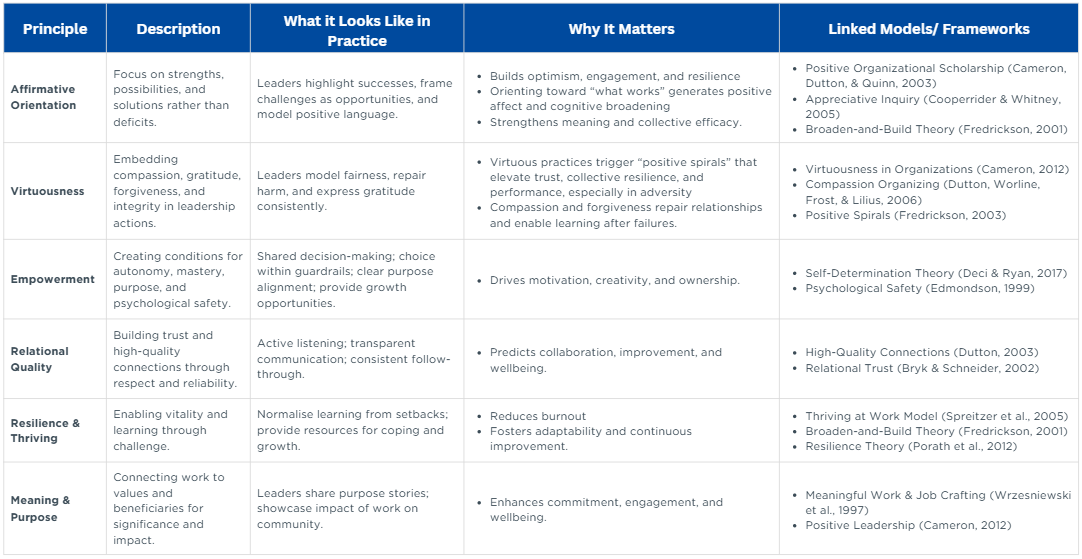
Why is this important in education?
Positive leadership is critical in education because it fosters conditions for teacher efficacy, student engagement, and whole-school improvement that elevate excellence, equity and wellbeing in education. By emphasising strengths, purpose, and relational trust, positive leadership counters deficit-based approaches and builds cultures of collaboration and resilience (Cameron, 2012; Bryk & Schneider, 2002). Research shows that high-quality connections and psychological safety enable educators to take risks, innovate, and learn from errors - key drivers of professional growth and student outcomes (Dutton & Heaphy, 2003; Edmondson, 1999).
Principles such as affirmative orientation and virtuousness promote optimism and ethical practice, which enhance morale and reduce burnout (Fredrickson, 2001; Dutton et al., 2006). Furthermore, linking work to meaning and purpose strengthens commitment and wellbeing, creating positive spirals of flourishing across the school community (Wrzesniewski et al., 1997; Cameron & Spreitzer, 2011). In short, positive leadership integrates evidence-based strategies that elevate excellence and equity in education (Cooperrider & Whitney, 2005).
Examples of positive leadership
Positive leadership in education focuses on creating a school culture that fosters wellbeing, growth, and collaboration for both staff and students. The following key practices are discussed further:
-
Positive communication: Using strengths-based, respectful language to build psychological safety, belonging, and engagement.
-
Recognition and celebration: Acknowledging achievements to boost motivation, engagement, and morale.
-
Trust and connection: Building strong relational networks to enhance collaboration and collective efficacy.
-
Compassionate change management: Leading transitions with empathy, understanding, and support for staff and students.
-
Meaningful measurement: Using data and feedback thoughtfully to guide improvement and decision-making.
Positive communication
Positive communication is a core element of positive leadership and refers to intentional, strengths-based, respectful, and affirming ways of interacting that support learning, wellbeing, and performance (Cameron, 2012, 2013). Grounded in Positive Organizational Scholarship, positive communication emphasises language and interactions that preserve dignity, foster trust, and build relational capacity, particularly during challenge or change (Cameron, 2012). A key mechanism underpinning this approach is the heliotropic effect, which suggests that individuals and systems move toward what gives them life, meaning that providing more positive than negative feedback enhances motivation, engagement, and growth (Cameron, 2013). Positive communication is further supported by Broaden-and-Build Theory, which shows that positive emotions expand individuals’ cognitive and emotional resources, enhancing problem-solving, resilience, and engagement (Fredrickson, 2001).
Positive communication also supports psychological safety, a key condition for learning environments in which students and staff feel safe to ask questions, admit mistakes, and contribute ideas (Edmondson, 2018). In educational contexts, the cumulative impact of daily interactions means that language choices directly shape belonging, motivation, and school culture. Research suggests that deficit-focused or shaming communication narrows attention and increases stress, while affirming, strengths-based language supports engagement, agency, and wellbeing (Cameron, 2013; Fredrickson, 2001).
In practice, positive communication involves:
-
balancing high expectations with care
-
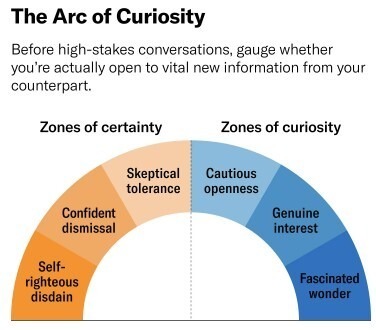
using curiosity rather than judgement
-
recognising effort and growth
-
framing feedback as opportunities for learning.
For leaders and educators, these practices enable accountability without harm and contribute to sustainable, flourishing school communities.
Recognition and celebration
Recognition and celebration are essential practices for building a positive and energising school culture. When leaders intentionally acknowledge the effort, progress, and contributions of staff, it helps people feel valued and reinforces the behaviours that support strong teaching and learning. Cultures that value recognition often focus their attention on the everyday moments where educators show care, creativity, professionalism, and persistence.
Research across education and positive psychology shows that recognition strengthens relationships and supports wellbeing. The Centre for Education Statistics and Evaluation (CESE) highlights that staff engagement increases when teachers feel appreciated and when their contributions are made visible within the community (CESE, 2020). The Australian Institute for Teaching and School Leadership also notes that effective leaders create environments where success is shared and where people feel seen in their efforts as well as their outcomes (AITSL, 2019). International studies echo this. Dutton (2003) found that authentic appreciation fosters high-quality connections, while Fredrickson’s Broaden-and-Build theory shows that positive emotions expand people’s capacity to think, collaborate, and learn (Fredrickson, 2001).
Celebrating effort matters because it recognises the human side of teaching. It affirms the emotional labour involved in working with young people and acknowledges that progress often happens in small steps. When educators feel valued, they are more energised, more present, and more able to bring their best to the classroom, which directly benefits students through stronger relationships, higher engagement, and more consistent learning experiences.
In practice, celebration can be simple. It might involve:
-
naming someone’s thoughtful approach to a student
-
recognising a colleague’s persistence with a challenging task, or
-
acknowledging the collective work of a team.
These micro-moments help build a positive climate where people feel supported and motivated to keep growing, reinforcing the idea that contribution matters and that every small effort plays a part in shaping the culture of the school and the learning environment students experience every day.
Trust and connection leads to collaboration
Trust and connection are at the heart of effective collaboration in schools. When educators feel respected, supported, and able to rely on one another, they are more willing to share ideas, take risks, and engage in the kind of professional dialogue that leads to genuine improvement. Decades of academic research has shown that high-trust environments create the psychological safety which is needed for staff to be honest about challenges, ask for help, and work together on solutions that benefit students and the broader school community.
Trust is one of the strongest predictors of collaborative cultures. Bryk and Schneider (2002) describe trust as a “moral resource” within schools and note that it grows when interactions are grounded in respect, integrity, and personal regard. They explain that “relational trust is forged in daily social exchanges” and that it shapes how willing people are to engage in the collective work of improvement. When trust is present, staff are more open to feedback, more generous in how they interpret one another’s actions, and more committed to shared goals. This creates the conditions for authentic professional learning rather than surface-level cooperation.
Similarly, connection also plays a significant role in how teams work together. Studies highlight that strong interpersonal relationships support deeper professional inquiry, higher-quality problem solving, and improved instructional practices (Hargreaves and Fullan, 2012). In practical terms, this means creating regular opportunities for staff to collaborate, celebrate progress, and build shared understanding of the school’s purpose and priorities. These relational routines are what helps educators feel part of something larger than their individual roles.
The aim of building a culture of high trust and connection, is to create an environment where collaboration becomes a natural way of working together. In high-trust and connected teams, we see staff that feel safe to share practice, challenge thinking respectfully, and commit to collective goals.
Compassionate change management
Compassionate change management is an approach to organisational transformation that integrates strategic planning with empathy and care for individuals affected by change. In educational leadership, this means acknowledging the emotional impact of transitions on staff and students, fostering psychological safety, and prioritising wellbeing alongside institutional goals (Westover, 2024).
Research highlights that compassionate leadership during change reduces resistance, builds trust, and mitigates stress-related outcomes such as burnout and attrition (Ramachandran et al., 2023; Corey & Watson, 2025). It emphasises transparent communication, active listening, and inclusive decision-making to create a collaborative environment (Vlachopoulos, 2021). Leaders who adopt compassionate practices such as validating emotions, pacing milestones, and celebrating progress, strengthen resilience and sustain positive culture during periods of uncertainty (Westover, 2024; Hashemi Toroghi et al., 2025).
This approach is critical in education because rapid systemic changes, coupled with pressures like accountability and post-pandemic recovery, have amplified stress among educators. Compassionate change management ensures that transformation is not only effective but also humane, aligning organisational success with human flourishing (Hashemi Toroghi et al., 2025; Corey & Watson, 2025).
Meaningful measurement
Meaningful measurement is all about collecting the right information at the right time with a clear purpose. In schools, data is most useful when it helps us understand what is really happening in practice and why it is happening. When leaders take this approach, measurement becomes less about compliance and more about learning, improvement, and supporting staff and students in a thoughtful way.
Australian research speaks strongly to this. The Centre for Education Statistics and Evaluation (2020) reminds us that data has the greatest impact when it is purposeful, timely, and directly linked to a school’s improvement priorities. This means being selective about what we collect and avoiding the trap of gathering information that is interesting but not actually useful. AITSL echoes this by highlighting that effective leaders use evidence that is relevant to their context and connected to clear goals (AITSL, 2019). These insights reinforce the idea that measurement should support professional judgement rather than replace it.
The AITSL Spotlight Papers also point out that data only becomes meaningful when educators make sense of it together. This process of talking, reflecting, and questioning is what turns information into insight. It connects well with the work of Earl and Kats (2006), who emphasise that data matters most when it prompts inquiry into what is working and what needs some attention. Timperley (2011) adds that measurement should act as a springboard for professional learning rather than a task that sits off to the side.
When leaders use measurement in this intentional way, it helps build clarity, confidence, and shared ownership across the school. Staff can see progress, identify emerging needs, and feel supported to adjust their practice. Meaningful measurement reinforces the idea that improvement is both possible and visible. It supports decision making that is human, informed, and responsive to the day-to-day realities of school life, helping create environments where both wellbeing and performance can flourish.
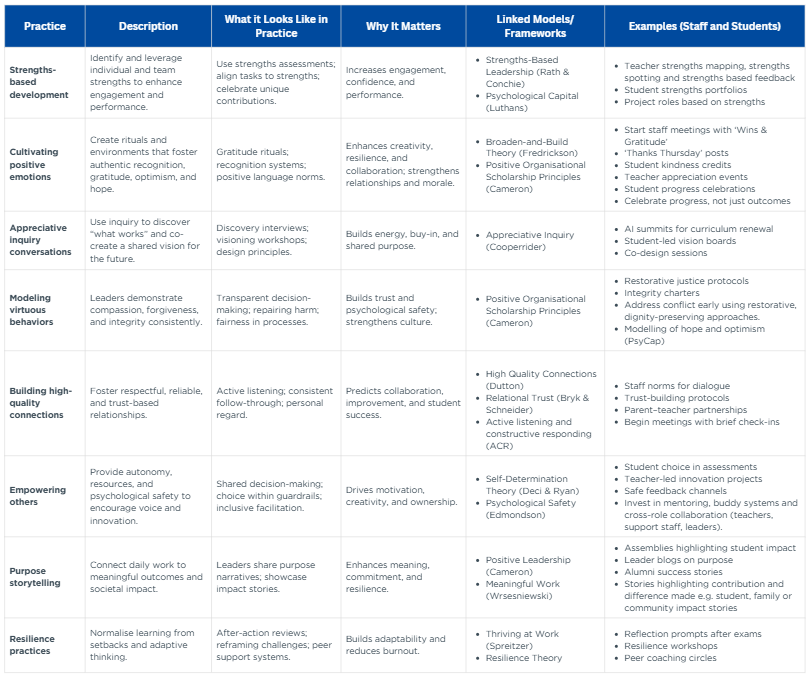
Further examples of positive leadership
The table includes information about other evidence-informed practices that leaders can implement to foster a culture of individual and organisational flourishing.
Related Resources
2026 PD Wrap Up: Connection IS The Content: A Pathway to Wellbeing
Curiosity Check and the Ask Approach

Communicating with Today's Parents: McCrindle Research and RoundTable

Connection IS The Content: A Pathway to Wellbeing

2026 PD Wrap Up: The Space Between Knowing and Doing

The Space Between Knowing and Doing
2026 PD Wrap Up: Connection IS The Content: A Pathway to Wellbeing
Curiosity Check and the Ask Approach
Communicating with Today's Parents: McCrindle Research and RoundTable
Connection IS The Content: A Pathway to Wellbeing
2026 PD Wrap Up: The Space Between Knowing and Doing