
.svg)
Case study: Revesby South Public School
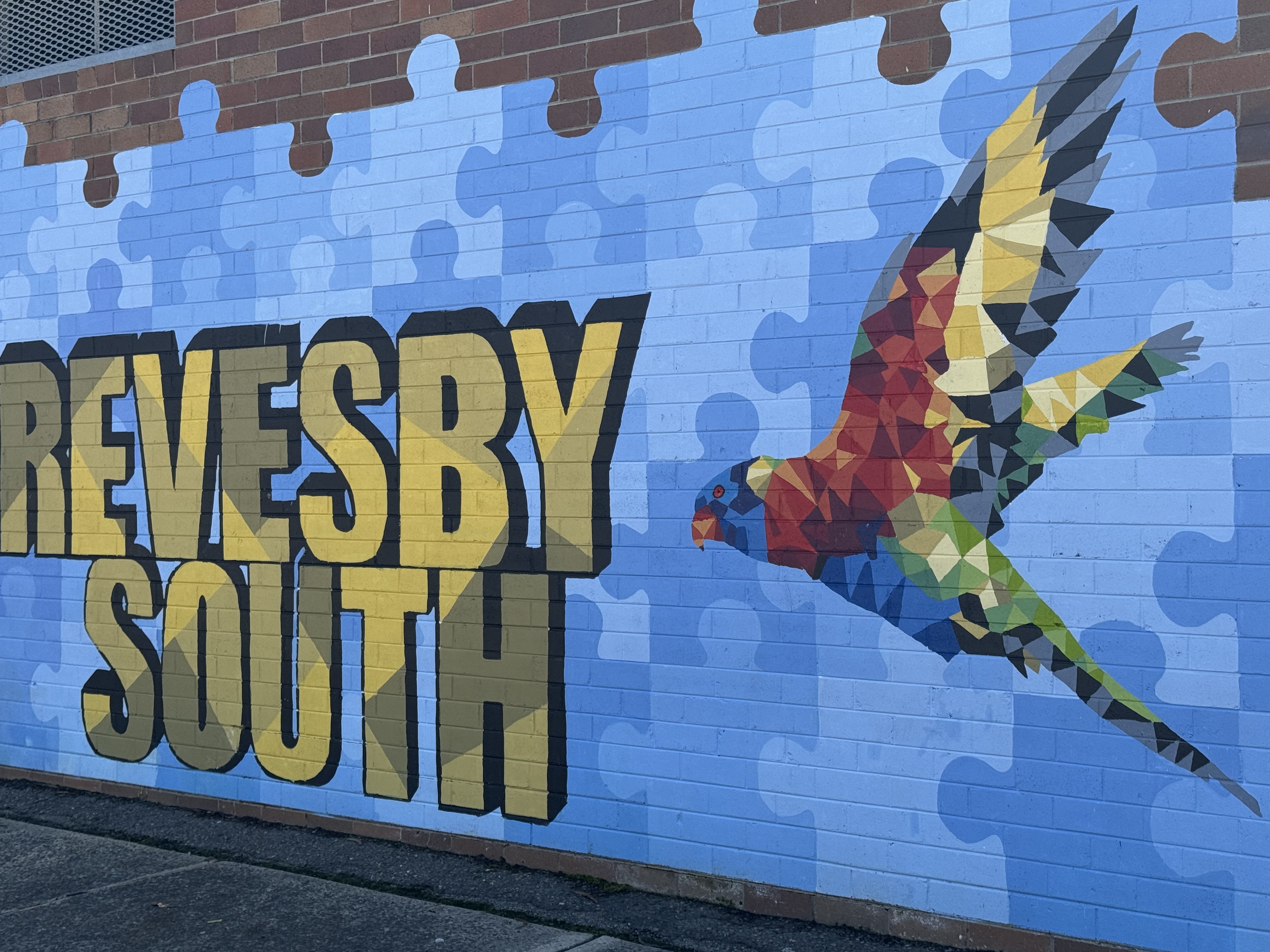
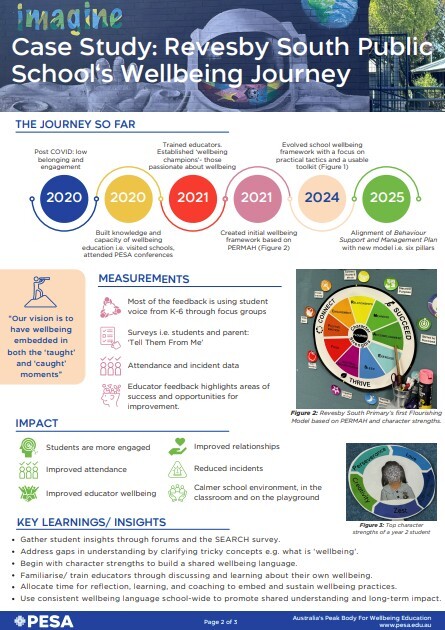
Located in southwest Sydney, Revesby South Public School is an inclusive government primary school making big strides in wellbeing. With a culturally diverse community of 300 students and 40 staff, the goal is for students to strive to succeed and to ultimately, flourish.
Author/ source: PESA. With thanks to Mr Christopher Whitten and Ms Nadine Saul of Revesby South Public School
Last updated: 27/05/2025
Related Resources

Research Summary
Student Flourishing in Australian Christian Schools
A landmark report exploring what helps adolescents flourish in Christian secondary schools across Australia. Drawing on one of the largest studies of its kind - a longitudinal survey of 22,092 students in Years 7–12 across 57 schools - the research identifies the conditions, practices and priorities that support students to flourish holistically: intellectually, socially, physically and spiritually. Author: Iselin, D.J. (2026). Student Flourishing in Australian Christian Schools Report. Christian Schools Australia. Canberra, ACT. Summary by PESA

Webinar/Video
2026 Online PD
Harnessing Collective Action to Sustain Wellbeing Initiatives in Learning Communities
Presented by Dr Tan-Chyuan Chin, PhD: Senior Lecturer in Wellbeing Science, The University of Melbourne. Optimising collaborative community practices in an interconnected learning system.

Article
PD Wrap Up
2026 PD Wrap Up: Harnessing Collective Action to Sustain Wellbeing Initiatives in Learning Communities
Ending our Term 1 focus on ‘building wellbeing communities from day one’, we welcomed Dr Tan Chyuan-Chin (TC), Senior Lecturer in Wellbeing Science to explore a systems-informed approach to strengthening and sustaining wellbeing initiatives. In this session, Dr TC contrasted isolated, program-led approaches to wellbeing with whole-of-community, systems-aligned models to design learning communities that support wellbeing from the ground up. Dr TC introduced the Theory of Change model and the SyInC-ToC framework as practical tools for planning, implementing and evaluating sustainable change. Author/Source: PESA and Dr Tan Chyuan-Chin, Senior Lecturer in Wellbeing Science.
%20(3).png)
Worksheet
The Systems Iceberg Reflection Tool
A four-question reflection tool using Senge's systems iceberg model to help leaders and educators uncover the deeper structures and beliefs driving recurring wellbeing issues. Author/Source: PESA
Research Summary
Student Flourishing in Australian Christian Schools
A landmark report exploring what helps adolescents flourish in Christian secondary schools across Australia. Drawing on one of the largest studies of its kind - a longitudinal survey of 22,092 students in Years 7–12 across 57 schools - the research identifies the conditions, practices and priorities that support students to flourish holistically: intellectually, socially, physically and spiritually. Author: Iselin, D.J. (2026). Student Flourishing in Australian Christian Schools Report. Christian Schools Australia. Canberra, ACT. Summary by PESA
Access Resource
Webinar/Video
2026 Online PD
Harnessing Collective Action to Sustain Wellbeing Initiatives in Learning Communities
Presented by Dr Tan-Chyuan Chin, PhD: Senior Lecturer in Wellbeing Science, The University of Melbourne. Optimising collaborative community practices in an interconnected learning system.
Access Resource
Article
PD Wrap Up
2026 PD Wrap Up: Harnessing Collective Action to Sustain Wellbeing Initiatives in Learning Communities
Ending our Term 1 focus on ‘building wellbeing communities from day one’, we welcomed Dr Tan Chyuan-Chin (TC), Senior Lecturer in Wellbeing Science to explore a systems-informed approach to strengthening and sustaining wellbeing initiatives. In this session, Dr TC contrasted isolated, program-led approaches to wellbeing with whole-of-community, systems-aligned models to design learning communities that support wellbeing from the ground up. Dr TC introduced the Theory of Change model and the SyInC-ToC framework as practical tools for planning, implementing and evaluating sustainable change. Author/Source: PESA and Dr Tan Chyuan-Chin, Senior Lecturer in Wellbeing Science.
Access Resource
Worksheet
The Systems Iceberg Reflection Tool
A four-question reflection tool using Senge's systems iceberg model to help leaders and educators uncover the deeper structures and beliefs driving recurring wellbeing issues. Author/Source: PESA
Access Resource